Showing posts with label piano lessons los angeles. Show all posts

Tuesday, November 5, 2013

How Get Your Kids to Practice More

Daily Practice Reinforcement

At Y Piano we love to use positive reinforcements to encourage consistent piano practice. Currently we use a prize bag to reward our students but this doesn't always work because many younger students have a hard time waiting & working over longer periods of time to earn the prize bag.  Additionally, older students are not always motivated by a prize bag. Thus we have come up with a more immediate solution for those parents who are having a difficult time getting their students to practice. In fact, this may eliminate the need for "nagging" which we know parents HATE to do! It's much better for everyone if students take the initiative to practice every day on their own.  

We have tested out a pilot program with a few student families with spectacular results! We took a few students who may love piano lessons, but hate to practice and either refuse and argue with the parents about practicing or conveniently forget to practice on a daily basis. We eliminated "punishment" and empty threat tactics (because they don't work and the students just get more upset) and replaced them with daily positive reinforcement reward boxes.
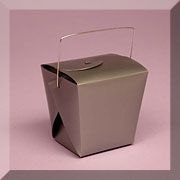
Here's what you need:
-Reusable small plastic gift box (pictured below)
-Raffle type tickets
-5 Gold coins
-Tiny toys and candy (i.e. such as you would find at places like Party City)
-Timer
(For anyone who doesn't want to go through the trouble of gathering the materials, we can provide you with a starter reward set for $20)

Here's how it works:
1. Determine a base time of how much we want the student to practice such as 5 minutes

2. Explain to the student that if they practice the homework we actually assigned (not just old easy songs) until the timer beeps, they will receive a mystery prize.

3. Each day put something in the prize box, either a tiny toy/candy or a gold coin or a raffle ticket.

-On the raffle ticket you can write some small reward that you can offer that day or at a later date that they can redeem such as ice cream, 30 extra minutes of TV or video games, 30 extra minutes of staying up late, trip to the park, having a playdate, get out of a chore etc.

-Or put a gold coin (RARELY). If they collect five gold coins, they get a big reward that you can determine. Gold coins should be rare and unexpected so really stretch them out and maybe only put them in when you see they did a fantastic job. Rewards for collecting 5 gold coins should be BIG.

Try not to be predictable in what you put in the box so the students stay excited.  Over time you want to spread out the toys and candy and reward them with more raffle tickets.

4. After successfully completing 1 or 2 weeks with your base time, bump it up by 1 minute. Now set the time for 6 minutes for example. Continue this process until the students are in the habit of practicing almost daily for at the goal time (i.e. 30 - 45 minutes for younger students, 1 hour for older students).

Friday, July 20, 2012

How Many Piano Lessons Per Week Should You Have?

Sometimes, after seeing their child super-enthused about their lessons, parents ask me if we should do more than one lesson during the week.  My answer: It depends.

Here is my quick answer:

1) If the student practices correctly throughout the week on a daily basis and does not master the material within a few days of the lesson, one lesson is enough per week.

However,

1) If your student is very young and tends to forget everything the next day (especially if there is no parent to work with them on a daily basis and practice together),
2) If you have difficulty enforcing regular practice,
3) If the student practices so much that they finish their assignment and get bored after 2 days,
4) If the lessons are not long enough to cover theory, duets, etc. because the student's attention span doesn't last past 30 minutes
5) If the student does not pay attention to correct technique and practices incorrectly all week
6) If you're in a rush to learn quickly

then a second lesson would greatly benefit the student.

From my observation in my daily teaching, these are the general reasons for my recommendations:

1) In the ideal situation, enough material can be covered during the lesson to challenge the student for the whole week with daily practice of 30 minutes to 1 hr.  But given that piano lessons tend to be shorter these days (30 minutes), we often don't cover enough for the students that really practice that much.  Also, in the ideal situation the student heeds the teachers pointers and advice on how to practice correctly with correct technique. I would rather a student not practice at all rather than practice the wrong way!

2) Some students just have a hard time absorbing everything in one 30 minute lesson. The younger students especially seem to wipe their memory clean the moment they get out of a lesson and on to the next activity. It helps if a parent is knowledgeable about the piano and can sit with the student every day and remind them of what was covered during the lesson and help them practice.

3) Many parents have a lot of difficulty enforcing daily practice of 20 minutes or more. If your student doesn't practice during the week, they completely make no progress by the next lesson and we end up using another lesson reviewing the same material.  It almost makes more sense to just schedule an extra lesson or two during the week that you may consider as "supervised practice".  Otherwise the parents rarely get to enjoy any return on the tuition they have paid for the weekly lessons.

4)  With young students, 3 days practice can mean quite a lot of progress and having lessons twice a week really keep things moving along. I find it works really well with a highly motivated child that practices so much that they finish everything I assign within a couple of days and are at risk of getting bored and losing motivation. 

5)  Often, we limit lessons to 30 minutes because the student's productive attention span doesn't last that long.  Unfortunately this does not give us enough time to go over technique, finger exercises, theory, duets, rhythm study, etc. I feel like many times my students are getting half the education I received because I can't possibly fit everything into 30 minutes. For this reason, I really do wish my 30 minutes students had lessons twice a week.  Students with 1 hour lessons don't encounter this problem.

6) Many students don't really pay attention to HOW they should practice and are often a bit on the lazy side when it comes to correct technique which is the utter backbone of playing an instrument. I don't have this problem with adult students because the understand the importance of moving their fingers and wrist and all that the way I tell them too. Kids, on the other hand, don't really understand or care and often don't want to suffer through training their hands physically to play correctly. In this case, extra lessons can prevent bad habits or incorrect playing. Imagine if the student is playing something incorrectly. It would be better if the mistake was pointed out after half a week instead of after one full week.

7) Some students are in a rush to learn quickly, for whatever reason. Since I have observed that more lessons almost always equal faster progress, in this case I would also recommend extra lessons. However, if no one is in a rush and just enjoying the experience of learning piano, there is no need for extra lessons.

Tuesday, November 30, 2010

"I Call This One 'Single Lady' "


It's amazing how much we sometimes underestimate and suppress kids.

Who ever said that you had to be named Mozart to compose as a little kid? And were his compositions that brilliant at that age? I beg to differ. All he did was mash together pieces of songs that he had been exposed to from an early age....there's nothing brilliant about that at all. In fact, all of my young students have done the same thing when GIVEN A CHANCE. Most teachers, I think, don't believe that little ones are capable of creating any coherent music. But they actually are, especially when they've been exposed to basic structure in songs they've played. It's just like when they learn how to speak.


I usually start out by letting the student (even as early as 3 years old) experiment with sounds for about 5 minutes during the lesson. If the banging really bothers you, bring ear plugs. But I would rather you listen how they slowly discover cause and effect and patterns.

Next, I usually get blank sheets of paper and ask them to press notes they want and I write the letters (or colors or numbers) for them. Then I let them decide on a name. It's amazing how much ownership over a piece encourages them to participate and do more composition and be more active and aware during lessons.

If the student is learning to write letters already, I then allow them to write their own letters. If you're still just using colors to denote notes, give them markers or crayons and let them draw circles of colors in the order that they make up a song.

Once they are learning how to read real music notation, I first write the notes for them but when they are comfortable I encourage them to write notes themselves.

The best part of this process is that the piano student has ownership of the activity and feels like they are directing something themselves. And of course, the titles they come up with can leave you giggling for days. One little five year old made up a song and played it for me. When I asked her what it was called, she turned her big eyes to me and disclosed: "I call this one 'Single Lady' " I was practically crying from laughter!

------------------------------
If you're looking for piano lessons in West Los Angeles or more music resources in the area, check out my site Brentwood Piano.

If you are looking for tutors & music or art instructors in Los Angeles, especially those trained and experienced in working with special needs students, check out Able Scholar.

Friday, April 16, 2010

Kids & Self-Discipline...They Need YOUR Help


People often mistake motivation for self-discipline. They believe motivation can keep you going for a long time toward their goals and are very disappointed when it doesn't. Motivation is the ignition, not the fuel in your engine. Your fuel is self-discipline, something that you do without questioning. The moment you start to question whether to do something difficult or not, there is a 90% likelihood you won't. This is precisely why a routine is important! I know that I absolutely hate the process of showering, doing my make-up and my hair every morning. Honestly, it is pure torture for me! But I do it every day without fail only because I have developed a habit and it is not a daily DECISION for me anymore. I just do it because I always do it.

Many kids start lessons (not just piano) because they enjoy music or think it would be so awesome to be able to play their favorite songs themselves. However, in order get to this goal of playing for fun, students need to practice regularly. And practicing, by definition, means that the student works on the pieces that are difficult, not the ones that they already know well. When a student sits down and plays the songs they already know, that is called playing for fun--which is the goal that we are trying to reach! :D

Unfortunately, self-discipline is not something kids are born with. Period.

Now, maybe there is that 1 in 1000 kid that loves to practice the challenging parts (I know I wasn't one of them!) but the rest absolutely hate it! That is normal, and unfortunately we can't cure normal. Kids don't have the long-term view of life to understand that sacrifices now lead to great things later for them to enjoy (playing songs they want to play). Therefore, kids have a very hard time with self-discipline unless they get guidance from parents who help them set up routines.

Parents must help their kids in the same way whether it be for piano lessons, homework or sports. Studies show that it takes about 2 weeks to develop a habit of doing something without questioning it. Therefore, I suggest that parents take 2 weeks and enforce a practice schedule, even for just 5-10 minutes every day. Use of primary reinforcers (rewarding the student with a treat for complying with the schedule) will help navigate through complaining, whining and tantruming if that is an issue. At the end of 2 weeks, most parents will be pleasantly surprised that the kids sit down to practice without being asked, or with minimal reminders.

Of course, some students might not have that extra time in their schedule to devote to practicing. In this case, I would highly suggest that they post-pone taking lessons (whether an instrument or sport) until they have the time (even 10 minutes) every day to practice. When kids don't progress at an activity, they start to become bored, discouraged and even resentful! Many people think that making the kids practice will make them resentful to the activity, but on the contrary, they become more resentful when they don't seem to be getting anywhere. There are some students that make progress even just from weekly lesson and in that case, I would say it is ok to continue with lessons because they kids are happy with the goals they are reaching slowly but surely. In the end, what we want is for them to have a sense of achievement and the ability to play things that they enjoy.

Saturday, December 12, 2009

Piano Rewards Club


I think by now even kids are familiar with your friendly neighborhood supermarket rewards program for customers. The more you shop, the more rewards points you get--and at the end of the month you have an envelope full of coupons and certificates to use at the store. I personally think the program is fantastic and I admit it works to get me back in the store. There is something about earning points that you never grow out of!

Well, if you're having a hard time motivating your kid (or yourself) to practice and strive for improvement, I highly recommend a Piano Rewards Club. I have started implementing this system with most of my students and so far it has really worked wonders!

To start, you need a little notebook, like a practice log you can buy at your local piano store. Here is how the game works:

1 minute of practice = 1 point
New song mastered = 5-20 points (based on difficulty) per page
New song memorized= 5-20 pts per page (again based on difficulty)
Random games = Random amounts of p0ints

Then the kids collect the points and redeem them for prizes. I have a big prize bag with things that have different "prices". For the older kids, they can save up a ton of points for gift certificates to their favorite places. I also encourage that parents use the points system for things the kids want such as going out somewhere or getting some new gadget.

Now, this system is not just for kids! I've effectively used it on myself and therefore other adults can use it too. You just need someone else in the picture to help keep you accountable. For example, to encourage my own practice schedule, I earn points and redeem them for prizes from my husband such as a night out on the town or help with some task I really want to avoid (like cleaning the mold off of the bathroom wall).

So, everyone, I highly encourage you to create the Piano Rewards Program in your own home!